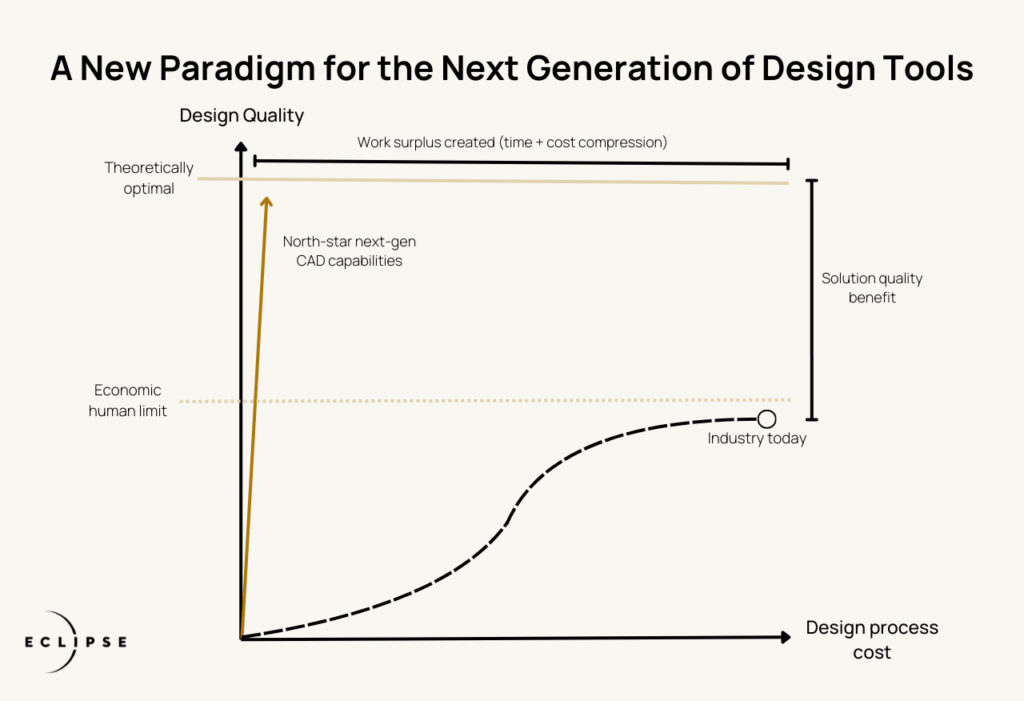
The success of any product in the physical world hinges on the quality of the design process across all domains.
- Technical breakthroughs across the tech stack will lead to high-quality designs at fractions of the cost: the landscape of computing is evolving at a rapid pace across every layer of the tech stack throughout physical industries. From significant enhancements in fundamental computing hardware to the proliferation of novel ML models and neural networks, we're witnessing the emergence of more intelligent design systems than ever before.
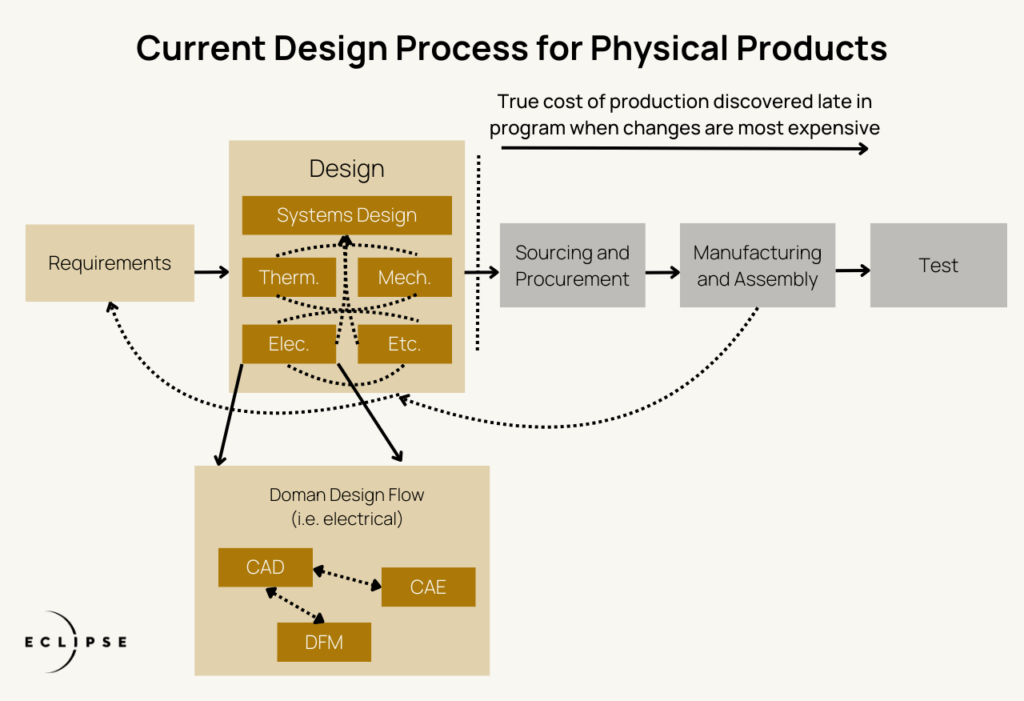
Surrogate ML models will make it possible to rapidly screen high-level decisions for feasibility by substituting complex simulations with less computationally-intensive neural networks that model system behavior. Meanwhile, the advent of synthetic data and novel data labeling techniques will make it possible to scale the use of supervised learning ML techniques in ways that were previously limited by availability of training data. With advancements in quantum-inspired approaches in both hardware and software algorithms, we’ll be able to enable faster execution of algorithms like monte-carlo simulation. And, finally, new ML algorithms and approaches to data representation make it possible to explore larger combinatorial search spaces. - Digitization of supply chains will improve design integration: we see this in action within our full-stack portfolio companies, such as VulcanForms and Bright Machines, offering digital manufacturing and assembly fabrics to provide customers with accurate cost-of-production for producing metal parts and product assembly, respectively. Even more broadly, we’re seeing every part of our oldest-line industries experiencing supply chain digitization with companies like Kojo (for construction), CogBase (for semi-custom parts), Flexport (logistics and freight), and Digikey (electronics), enabling an explosion of supply chain data to feed into the design phases.
- There's an increasing need for high-mix, low-volume production manufacturing: products in this world are increasingly becoming more customizable with more complex parts, from electronics to medical devices to cars to homes. Customers want to be able to tailor preferences to their needs. This has resulted in a widely recognized rise in high-mix, low-volume production. This also means decades-old tools can’t support the pace at which many consumer products are evolving. New entrants like Reframe Systems are already leveraging design automation, modular components, and digital manufacturing to scale customizable, net-zero homes.
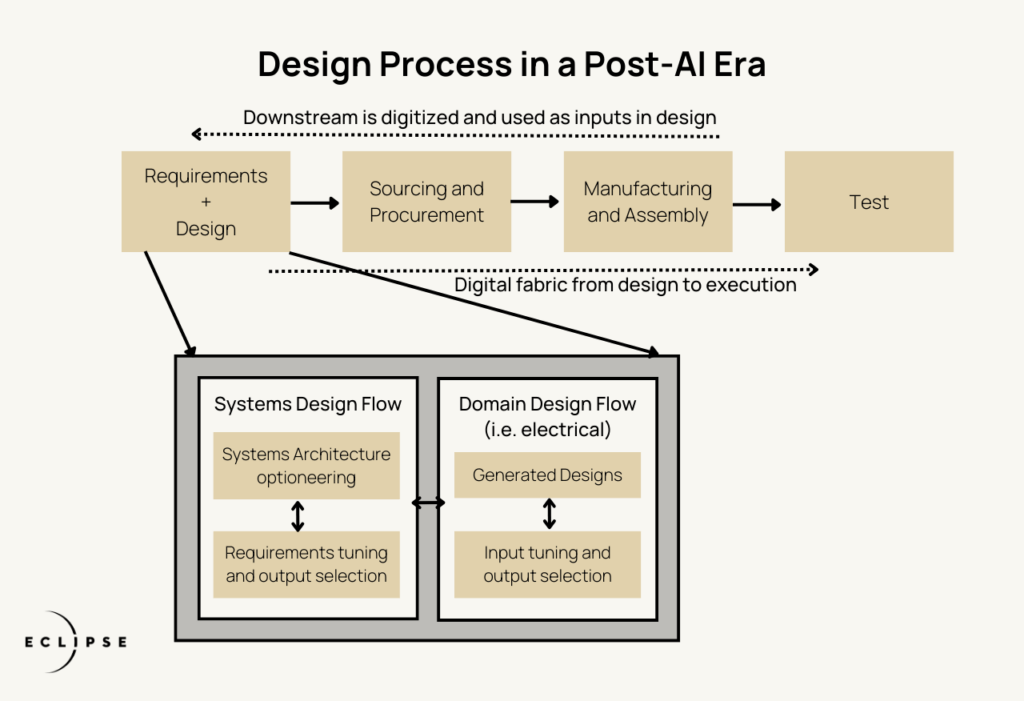
We foresee a future where generative systems will handle the bulk of manual design tasks.